Stories that sit with loss without flinching
15 books
For when you need permission to grieve at the volume you actually feel. Yanagihara doesn't tidy any of it.
The plague takes a child in 1596. The mother survives. O'Farrell writes the survival as the slowest possible undoing.
Friendship that lasts longer than people. A grief about presence — about someone still alive but unreachable, about who you became together.
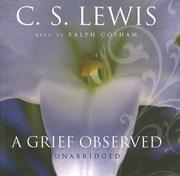
C. S. Lewis after his wife died, writing in the cheap notebooks he found around the house. The most honest book about losing faith inside loss.
A neurosurgeon receives his own terminal diagnosis and writes about meaning while there's still time. He didn't finish. His wife wrote the epilogue.
After her father dies, Helen Macdonald trains a goshawk and reads T. H. White. Falconry becomes a way to think about grief without naming it.
Two academic couples, a forty-year friendship, the slow approach of an ending. Stegner's last novel and the one most reread by people in their sixties.
A Nigerian marriage and the children that don't survive. Adebayo writes loss as something a marriage can lift between two people, and sometimes can't.
Lincoln's son dies and the dead in the cemetery overhear him weep. Saunders builds a polyphony of voices, all of them loving someone, all of them late.
A widower, two boys, and a giant talking crow that moves into the flat. Forty thousand words, and entirely a poem.
Two sisters raised by a mother who drives into a lake and an aunt who hasn't lived indoors in years. Robinson writes water and wind as if they were the only stable things.
A man returns to the Irish seaside town of his childhood after his wife's death. The past slides under the present like water under sand.
Lucy Barton's first husband loses his stepmother, and Lucy goes with him to look at his real one. Strout writes grief as something that surfaces sideways, in old kindnesses.
A painter returns to Toronto for a retrospective and meets her childhood again. Atwood maps the kind of grief that takes forty years to identify.
Three women, three days, one Mrs. Dalloway shared between them. Cunningham writes depression with the precision of a clock, and the kindness of a friend who's been there.